A practical alternative to KVM

KVM is a mature and widely used virtualization technology. It is reliable, efficient, and deeply integrated into the Linux ecosystem. For many organizations, it is an obvious starting point when building virtualized infrastructures.

However, teams searching for a KVM-based solution alternative are rarely questioning the hypervisor itself. What they are actually looking for is a more sustainable way to run virtualization in production, with less operational complexity, clearer responsibility boundaries, and stronger long-term guarantees

To support this process, we've created the 2025 Vendor Landscape Guide: a clear, structured comparison of the leading platforms available today: VMware, Hyper-V, Proxmox, Red Hat, Nutanix, and our own Vates VMS.

This whitepaper is designed to help you understand the differences that matter: cost models, roadmap visibility, ecosystem flexibility, and architectural control, so you can make the right decision for your infrastructure.

→ Fill out the form to access your copy of the 2025 Virtualization Guide. It’s a practical resource for organizations exploring their next move beyond VMware.

Visualization illustration

What KVM really provides

KVM is a kernel-level virtualization technology that enables virtual machines to run efficiently on Linux hosts and serves as the technical foundation of many KVM-based virtualization solutions, including enterprise distributions and cloud platforms.

What these KVM-based solutions typically have in common is that KVM deliberately leaves most operational decisions to the operator. KVM itself does not define how virtual machines are backed up or restored, how upgrades are performed safely at scale, or how storage and networking should be integrated and operated. These aspects are handled through surrounding tools, integrations, and operational practices chosen by the organization.

In real-world environments, this means that responsibility for the overall virtualization stack largely rests with the end user. Even when using a packaged KVM-based solution, different components often come from different vendors, follow different lifecycles, and require internal expertise to remain aligned over time.

In enterprise contexts, KVM is frequently consumed as part of broader stacks, including solutions provided by vendors like Red Hat, where KVM is only one element among many. While this approach offers flexibility, it can also blur responsibility boundaries between components and vendors, which represents a significant operational risk for organizations relying on KVM-based solutions.

Why teams look for an alternative to KVM

The limitations of KVM-based solutions usually appear over time, as environments grow and operational requirements increase.
Common challenges include:

  • Fragmented tooling across hosts, storage, and backups, increasing operational risk
  • Heavy reliance on custom scripts and internal expertise, creating knowledge silos
  • Complex upgrades and lifecycle management
  • Limited visibility across the infrastructure
  • Unclear support boundaries when issues span multiple components
  • Security responsibilities distributed across heterogeneous tools and processes

These challenges are rarely caused by KVM itself. They stem from the absence of a unified platform that clearly defines how a KVM-based environment should be operated and supported end to end.

Compare illustration
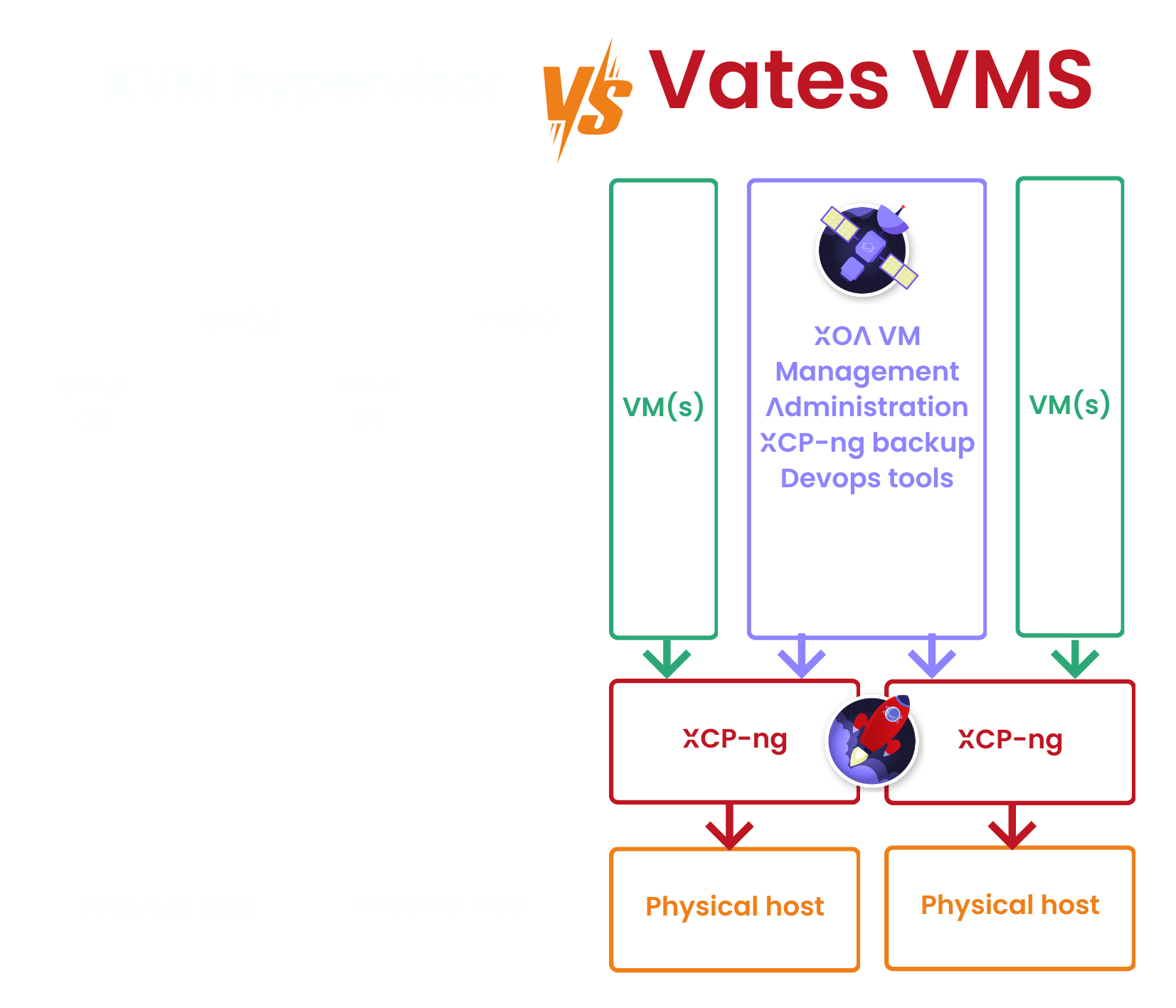
KVM vs Vates VMS comparison

From hypervisor to virtualization platform

A virtualization platform does so much more than just run virtual machines. It shapes how virtualization is deployed, managed, secured, updated, and supported over time. By doing this, it helps to minimize operational risks and standardizes everyday workflows.

For many organizations, opting for something other than KVM-based solutions means selecting a platform that truly addresses these operational needs, instead of piecing together and maintaining a system from various loosely connected components.

This kind of platform takes the burden off individuals and random processes, placing it on the system itself. It incorporates operational best practices, ensures consistency, and establishes clear accountability.

Vates VMS: a production-ready virtualization platform

  • Hypervisor foundation

  • Centralized management

  • Native XCP-ng VM backup and recovery

  • Defined lifecycle and upgrades

  • Commercial support

It replaces the need to assemble and operate a fragmented KVM-based stack.

Vates VMS provides a complete, open virtualization platform for production environments.

Why organizations look beyond KVM-based solutions

KVM is a strong virtualization technology.
But most KVM-based solutions leave backup strategy, upgrades, and integration choices to the operator.
As environments scale, this distributed responsibility becomes operational risk.

KVM based-stack Vates VMS
Component-level Infrastructure-level
Fragmented Unified
Distributed responsibility Clear operational ownership

Contact us

A question? Need a quote? Need assistance with a migration from VMware, HyperV, Nutanix or any other hypervisor?
Send us a message describing in few words your infrastructure and your needs, and we will get back to you as soon as possible!

Contact us

Don't take our words for it - read what our users have to say