
Join Vates, DataCore and NeoVAD on March 24 for our webinar on validated virtualization
Discover how Vates VMS and DataCore, integrated by NeoVAD, can help build a validated, modern virtualized infrastructure.


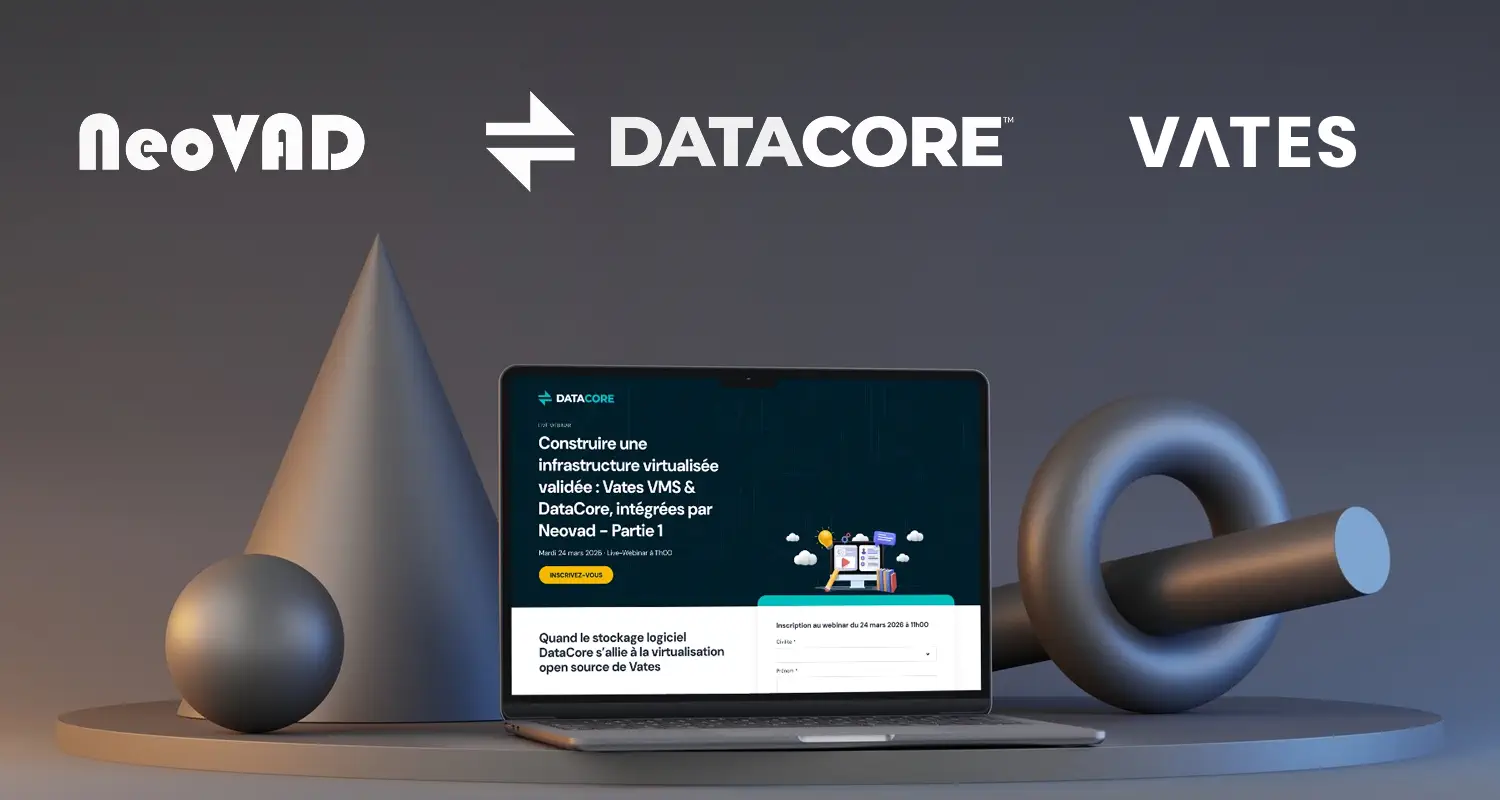
Building a modern virtualized infrastructure is no longer only about running VMs. IT teams also need a platform that is resilient, efficient, and easier to operate over time.
That is exactly the focus of our upcoming webinar with DataCore and NeoVAD, taking place on March 24, 2026: “Building a validated virtualized infrastructure: Vates VMS & DataCore, integrated by NeoVAD.”
This session will explore how Vates VMS, our open-source virtualization stack, can work alongside DataCore’s software-defined storage solutions, with NeoVAD bringing its integration expertise. Together, these technologies help organizations design an infrastructure that combines virtualization, storage, and operational simplicity in a more coherent way.
For readers who want to explore the topic before attending, the Vates VMS documentation and the Xen Orchestra documentation offer a useful overview of the platform and its management capabilities. This webinar also reflects the growing collaboration between Vates and NeoVAD in France, following the partnership announced last year. For more context, you can also discover the blog post on Vates’ partnership with NeoVAD.
Attendees will hear from Julien Cadenel of DataCore Software, Swann Salmon of NeoVAD, and Marc-André Pezin of Vates, who will share how open virtualization and software-defined storage can come together in a validated, production-ready infrastructure.


Register for the webinar
Participez au webinar Vates, DataCore et NeoVAD le 24 mars sur l’infrastructure virtualisée validée
Construire une infrastructure virtualisée moderne ne consiste plus seulement à faire tourner des machines virtuelles. Les équipes IT ont aussi besoin d’une plateforme résiliente, performante et plus simple à exploiter dans la durée.
C’est précisément le sujet de notre prochain webinar avec DataCore et NeoVAD, organisé le 24 mars 2026 autour du thème : « Construire une infrastructure virtualisée validée : Vates VMS & DataCore, intégrées par NeoVAD ».
Cette session montrera comment Vates VMS, notre stack de virtualisation open source, peut s’intégrer aux solutions de stockage logiciel de DataCore, avec l’expertise d’intégration de NeoVAD. Ensemble, ces briques permettent d’imaginer une infrastructure plus cohérente, qui associe virtualisation, stockage et simplicité opérationnelle.
Pour celles et ceux qui souhaitent découvrir le sujet avant le webinar, la documentation Vates VMS et la documentation Xen Orchestra offrent un bon aperçu de la plateforme et de ses capacités d’administration. Cette session s’inscrit aussi dans la dynamique de collaboration entre Vates et NeoVAD en France, dans la continuité du partenariat annoncé l’an dernier. Pour aller plus loin, vous pouvez également consulter l’article de blog consacré au partenariat entre Vates et NeoVAD.
Les participants retrouveront Julien Cadenel pour DataCore Software, Swann Salmon pour NeoVAD et Marc-André Pezin pour Vates. Ensemble, ils expliqueront comment la virtualisation open source et le stockage software-defined peuvent s’articuler au sein d’une infrastructure validée, prête pour la production.


S'incrire au webinar